Kitchen Countertop Edge Profiles: A Practical Guide (Including Mitered)
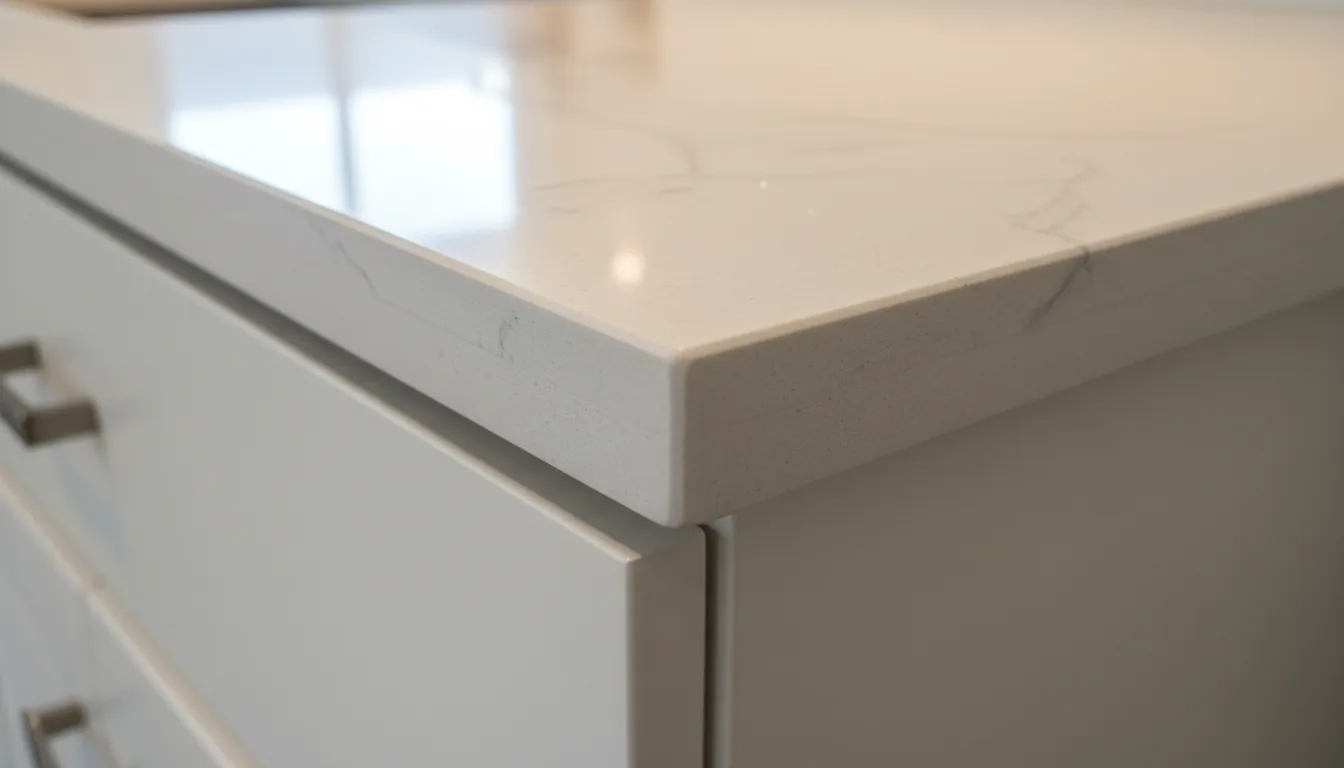
Edge profile is one of those countertop decisions that gets glossed over until the templater is in your kitchen asking you to pick one. Then suddenly you’re trying to choose between four shapes you’ve never thought about, with limited info and a contractor waiting.
Here’s what each edge actually looks like, what it costs, and how to pick the right one for your kitchen and stone.
The 4 Standard Edges (Included in Most Quotes)
These four are included with every countertop install we do at JR Stone. No upcharge regardless of which one you pick.
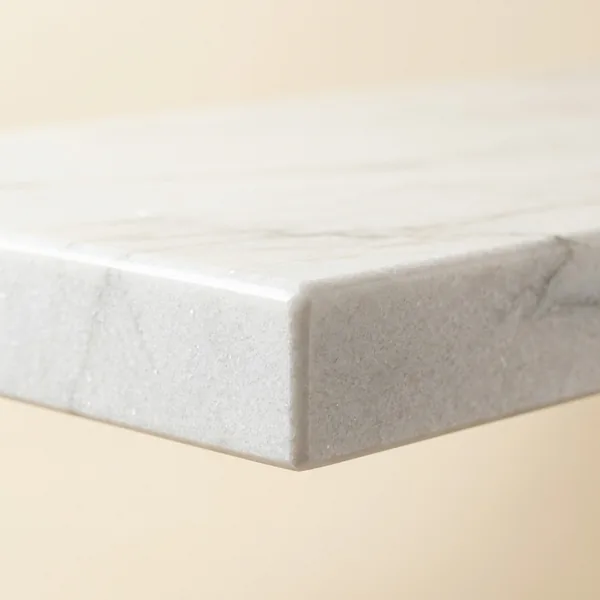
Eased
Clean 90° with tiny softened top corner.
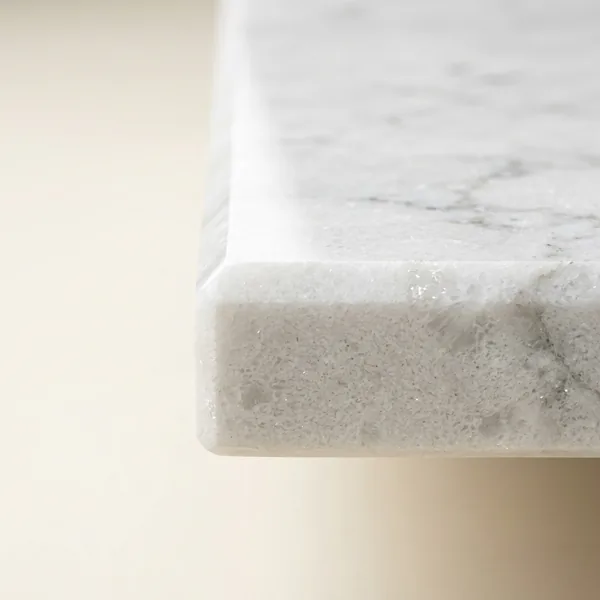
Bullnose
Fully rounded half-circle from top to bottom.
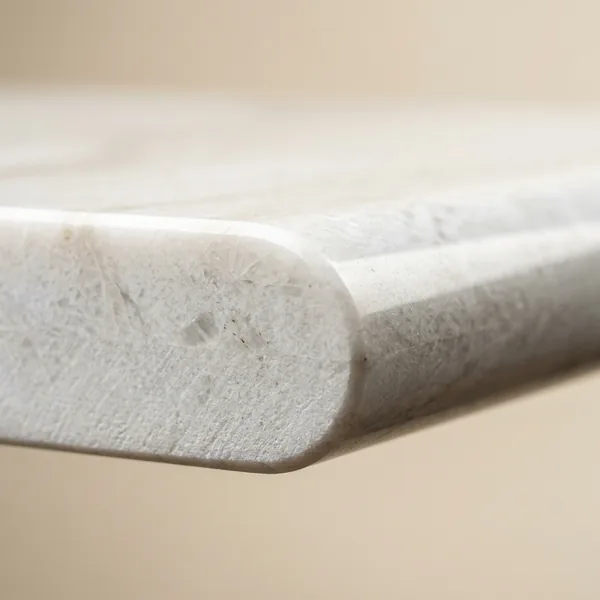
Beveled
Angled 45° chamfer along the top edge.
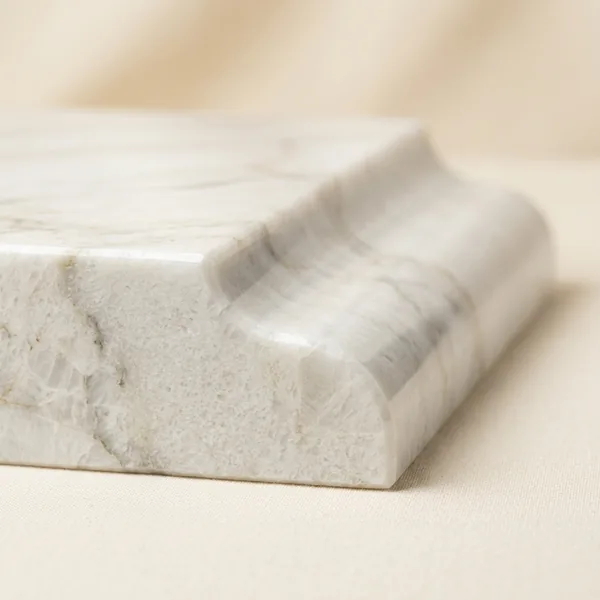
Ogee
Decorative S-curve, classical and elegant.
Eased (Most Popular)
The eased edge is what we install in roughly 70% of modern Palm Beach County kitchens. It’s a 90-degree edge with the very top corner softened just enough to remove the sharp factory edge. Looks clean, contemporary, and works with any cabinet style or stone.
Pick eased if: you have shaker or modern flat-front cabinets, you want a contemporary look, or you don’t want to think about it. It’s the safe choice that ages well.
Bullnose
The bullnose is fully rounded — the entire edge curves from top surface around to underside in a smooth half-circle. It softens the kitchen and feels more traditional. Common in transitional and traditional kitchens; less common in modern ones.
One practical benefit: the rounded edge is easier on hips and arms when you bump into the counter. Worth considering in narrow walkways.
Pick bullnose if: you have raised-panel or beaded cabinet doors, you want a softer feel, or you have small kids who’ll bump into the counter.
Beveled
A beveled edge has an angular 45-degree chamfer along the top. The beveled facet catches light differently than the rest of the surface, creating a subtle highlight. It’s a middle-ground choice between modern (eased) and traditional (ogee).
Pick beveled if: you want some visual interest without going decorative, or if your kitchen has a lot of straight lines that could use a small accent.
Ogee
The ogee is the classical decorative edge — a smooth S-curve flowing from top to bottom. Reads as traditional, formal, or French-country. Less common in current installs but still the right choice for traditional kitchens.
Pick ogee if: you have an inset or beaded cabinet door, your kitchen leans traditional or formal, or you’re matching an older home’s architectural details.
Premium Edges (Upcharge)
These add to the linear-foot cost or have a flat upcharge. We’ll price the edge you want directly into your quote so there are no surprises.
Mitered Edge ($25–$50/linear foot)
A mitered edge joins two pieces of stone at a 45-degree angle to make a thinner slab look thick. Most common use: making a 3cm slab look like a 6cm or 12cm chunky slab on an island. Done well, the seam is invisible. Done poorly, you can see the joint — this is one place where fabrication skill matters more than stone quality.
Waterfall End ($300–$800 per side)
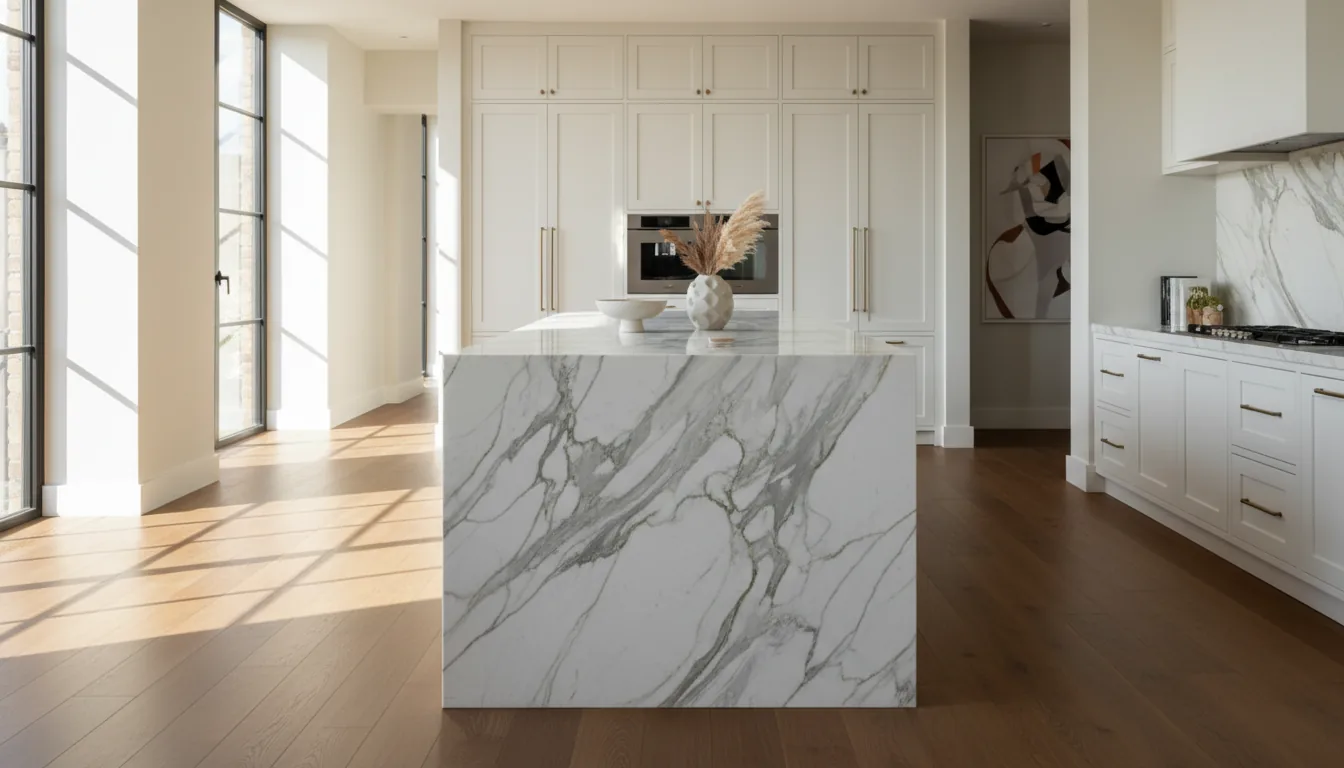
A waterfall is a vertical extension of the countertop down the side of an island. The horizontal countertop and vertical side panel are joined with a mitered seam, and the stone’s veining flows from one onto the other. Looks dramatic on calacatta marble or veined quartzite.
Decorative Profiles ($15–$35/linear foot)
Beyond ogee, fabricators can produce dozens of decorative profiles — double ogee, triple pencil, French chiseled, dupont, and so on. These are uncommon in modern Palm Beach County kitchens but available for traditional or period homes.
The Mitered Edge: How It Actually Works
This deserves its own section because it’s the premium upgrade most homeowners don’t fully understand.
Stone slabs come in two standard thicknesses: 2cm (about 0.79 inch) and 3cm (about 1.18 inch). Both look thin compared to the chunky 4cm or 6cm slabs you see in luxury magazine kitchens. To get that thick look without paying for a thicker slab, fabricators “build up” the apparent thickness using a mitered edge.
Here’s how: a 3cm slab is cut for the countertop top. A second piece of the same 3cm slab is cut for the apron (the vertical strip below the countertop edge). Both pieces are mitered at 45 degrees, then glued and clamped together with color-matched epoxy. When polished correctly, the mitered seam disappears.
Result: the counter looks like solid 6cm stone (or 12cm if you stack two mitered apron pieces). At a fraction of the cost of buying actual 6cm slabs, which can run 3x the price.
Pick a mitered edge if: you want the look of a thick slab without the slab cost, you have an island or peninsula that benefits from a chunkier look, or your stone has dramatic veining that becomes more visible with depth.
Waterfall Ends: When They’re Worth It
A waterfall is a striking design feature, and it’s also one of the most over-specified upgrades in remodel quotes. They’re great in some kitchens and a waste of stone in others.
Waterfalls work best when:
- The island is the visual focal point of an open-concept kitchen visible from the living/dining space
- The stone has dramatic veining (calacatta marble, Mont Blanc quartzite, exotic granite) that flows beautifully from horizontal to vertical
- The island has at least one fully-exposed end (not pushed against a wall or cabinet bank)
Waterfalls aren’t worth it when:
- The island sits against a wall or peninsula extends from cabinets — the waterfall side is invisible
- The stone has a uniform pattern (most quartz, basic granite) — the dramatic flow effect doesn’t exist
- The kitchen is small or closed-off — the waterfall doesn’t get seen from anywhere meaningful
Cost: $300 to $800 per waterfall side, depending on stone choice and slab yield. Two waterfall ends on an island is $600 to $1,600 above your base countertop cost.
How to Pick the Right Edge
Three quick filters get most homeowners to the right edge in five minutes:
Filter 1: Match your cabinet style.
- Modern flat or shaker doors → eased
- Transitional shaker or beaded → eased or bullnose
- Raised-panel or inset traditional → bullnose or ogee
- Country/farmhouse → bullnose or beveled
Filter 2: Stone choice.
- Veined stones (calacatta, Mont Blanc, Taj Mahal) — consider mitered or waterfall to showcase the veining
- Uniform quartz — stick with standard edges; the pattern doesn’t reward decorative profiles
- Speckled granite — eased or beveled; busy patterns get muddied by ornate edges
Filter 3: Kitchen layout.
- Open-concept island visible from living areas — waterfall is genuinely worth considering
- Galley or U-shape against walls — standard edges only; no upcharge needed
- Tall homeowners or pantry near the counter — bullnose softens collisions
If you’re still stuck, ask your fabricator to bring small samples of the standard edges to your in-home consultation. Holding the actual stone with each edge profile in your hand makes the decision instantly obvious.
Want a Countertop Quote?
Free in-home measurement and a firm written quote that includes the edge profile you want. No surprises at fabrication.
Se habla español
We respond within one business day · No spam, no obligation
Related: Curious how the slab actually gets cut? Tour our fabrication shop →
Also consider: Honed vs leathered vs polished finishes → — the finish decision matters as much as the edge profile.
Frequently Asked Questions
What is a mitered countertop edge?
A mitered edge is when two pieces of stone are joined at a 45-degree angle to create the appearance of a thick slab without the cost of buying actual thicker material. Most commonly used to make a 3cm slab look like a 6cm or 12cm chunky slab, especially on islands. The seam is virtually invisible when polished correctly.
How much does a premium edge profile cost?
Standard edge profiles (eased, bullnose, beveled, ogee) are included in countertop pricing. Premium options add to the linear-foot cost: mitered edges run $25 to $50 per linear foot extra, waterfall ends add $300 to $800 per side, and decorative ogee or chiseled edges add $15 to $35 per linear foot. We price the edge you want into your written quote.
What is the most popular kitchen countertop edge?
The eased edge is the most popular choice in modern Palm Beach County kitchens, accounting for roughly 70% of installs. It’s a clean 90-degree edge with a tiny softening on the top corner. It works with any cabinet style and any stone material, costs nothing extra, and has a timeless contemporary look.
Is a waterfall edge worth the cost?
Worth it if your island is the visual focal point of an open-concept kitchen and the stone has dramatic veining (calacatta, quartzite, exotic granite). Not worth it on uniform-pattern stones or in kitchens where the island sits against a wall. Budget $300–$800 per waterfall side on top of base countertop cost.
Can you change a countertop edge after install?
Almost never. The edge is shaped at fabrication, and reshaping requires removing the slab, transporting it back to the shop, re-cutting and polishing, then reinstalling. The labor cost typically exceeds the cost of starting over. Pick the edge profile carefully before fabrication.
Related: Picking between cabinet types? RTA vs. Semi-Custom vs. Custom Cabinets →