Honed, Leathered, or Polished: What's the Difference?
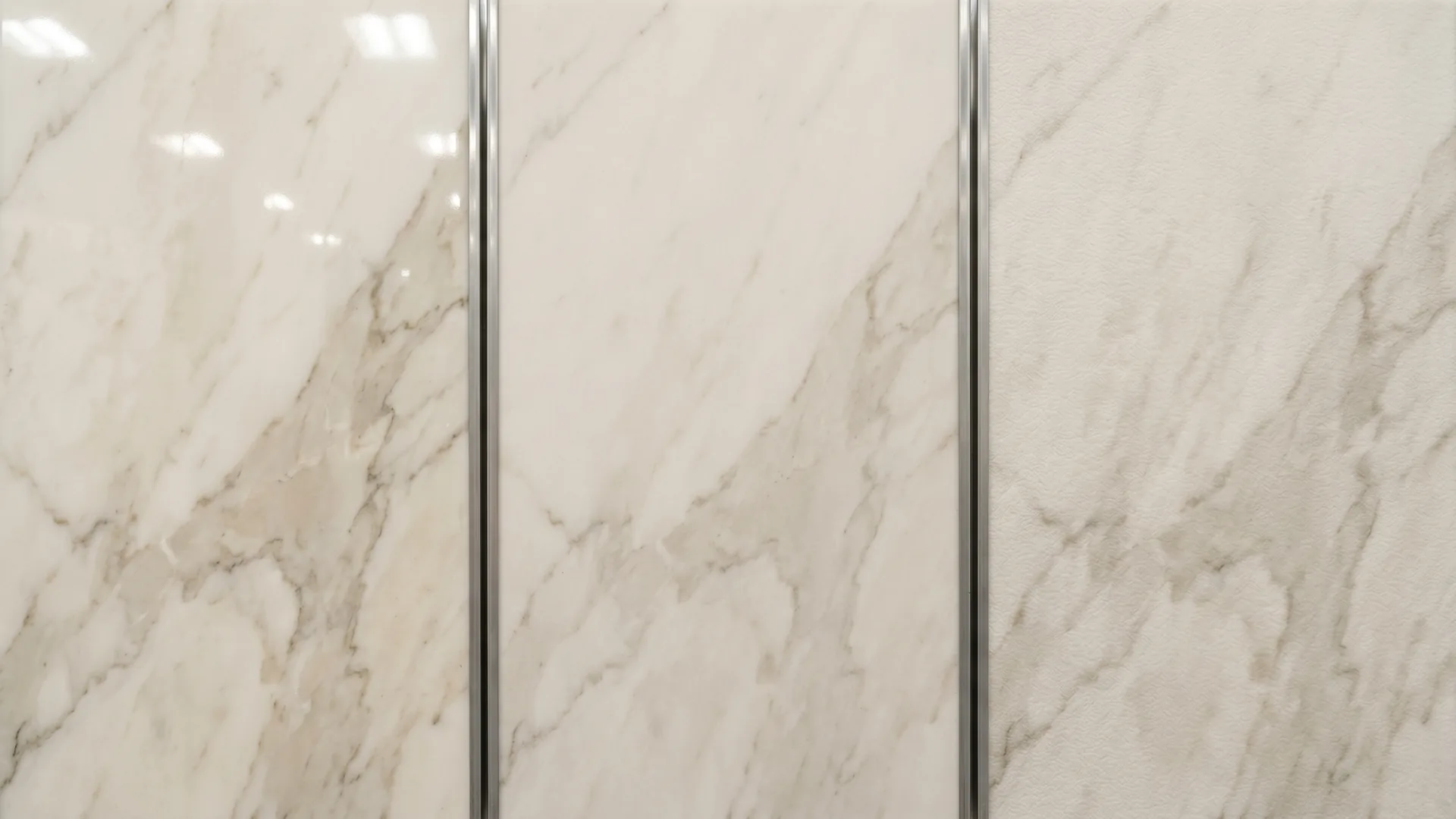
Same slab, three finishes. Polished (left) · honed (center) · leathered (right).
Finish is the last decision before a stone countertop gets installed, and it's the one clients tend to think about least. The stone gets picked from samples, the edge profile gets chosen with the fabricator, and finish usually defaults to polished because that's how the slab arrives from the quarry. But the finish changes how the same stone reads in a kitchen more than most clients expect. Three options come up on nearly every project: polished, honed, leathered. Here's how each one actually looks, feels, and performs.
What a countertop finish actually is
A stone slab leaves the quarry rough. It gets polished through a sequence of diamond-pad grits — coarse to fine — until the surface reaches the desired finish. Polished is the end of the sequence, at 3000-grit or higher, when the surface becomes a mirror. Honed stops the process earlier, around 400 to 800 grit, leaving a matte surface. Leathered takes a honed slab and runs brushes across it to add a subtle pebbled texture. Same stone, same slab, three different processing endpoints.
Polished
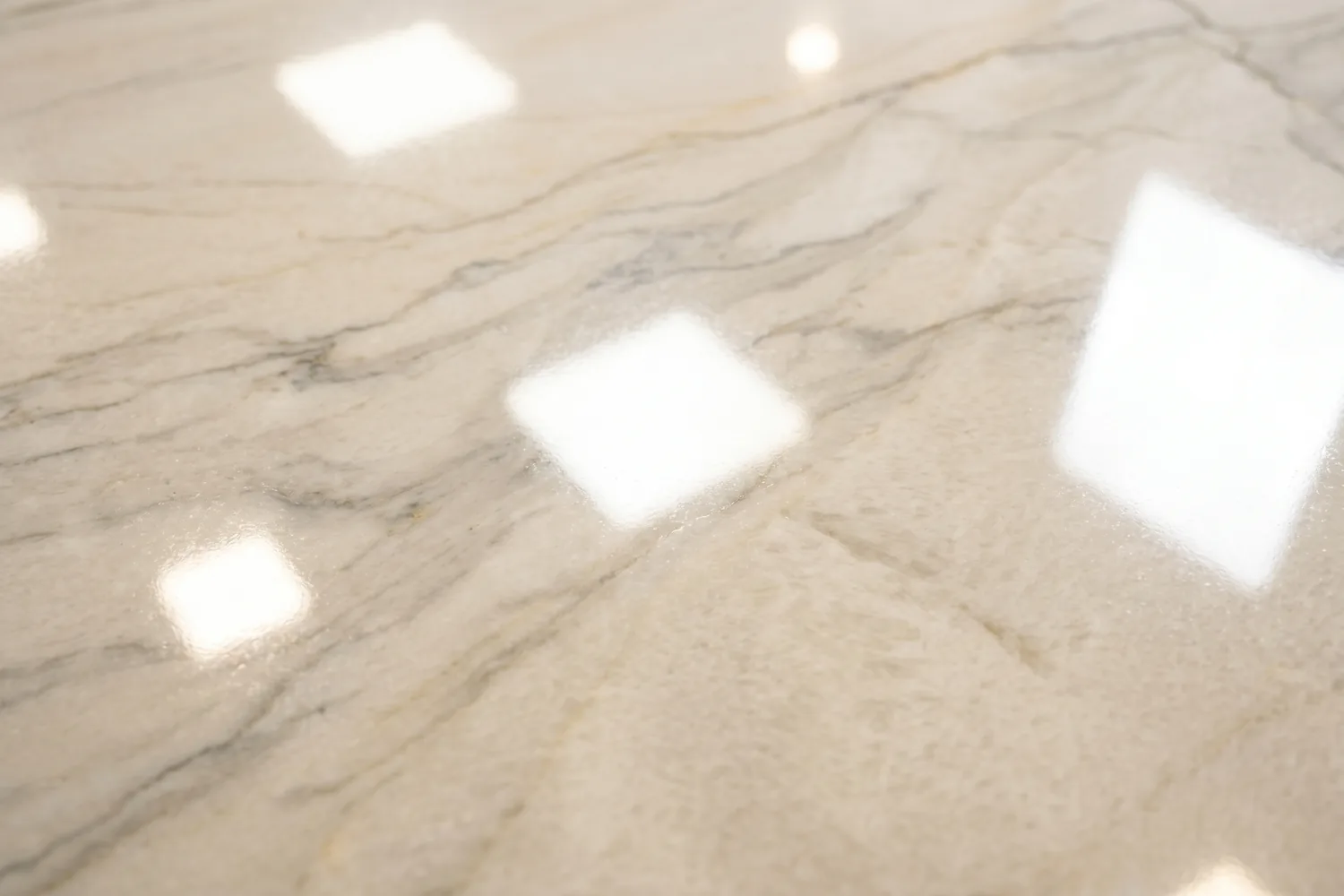
The default. Most stone slabs arrive at the fabricator already polished, which is why polished is the cheapest and most common finish. The surface reads as a glossy mirror — light reflects off it, veining pops at maximum saturation, colors look deep and wet. It's the finish most showroom samples use because it photographs best.
Pros
- Maximum visual drama — veining and color pop hardest
- Easiest to wipe clean day-to-day
- Most stain-resistant when sealed (closed pores)
- Widest slab availability — every yard stocks polished
- Baseline pricing — no upcharge over standard fabrication
- Works in every kitchen style, especially modern and formal
Cons
- Shows every fingerprint and water spot
- Can feel cold or formal in casual kitchens
- Scratches and etches (on marble) show more
- Bright overhead lights reflect dramatically — can read busy
- Less forgiving with heavy daily wear
Best fit: Modern, luxury, or formal kitchens. Clients who want the stone to be the visual statement. Households that will wipe counters after every use.
Honed
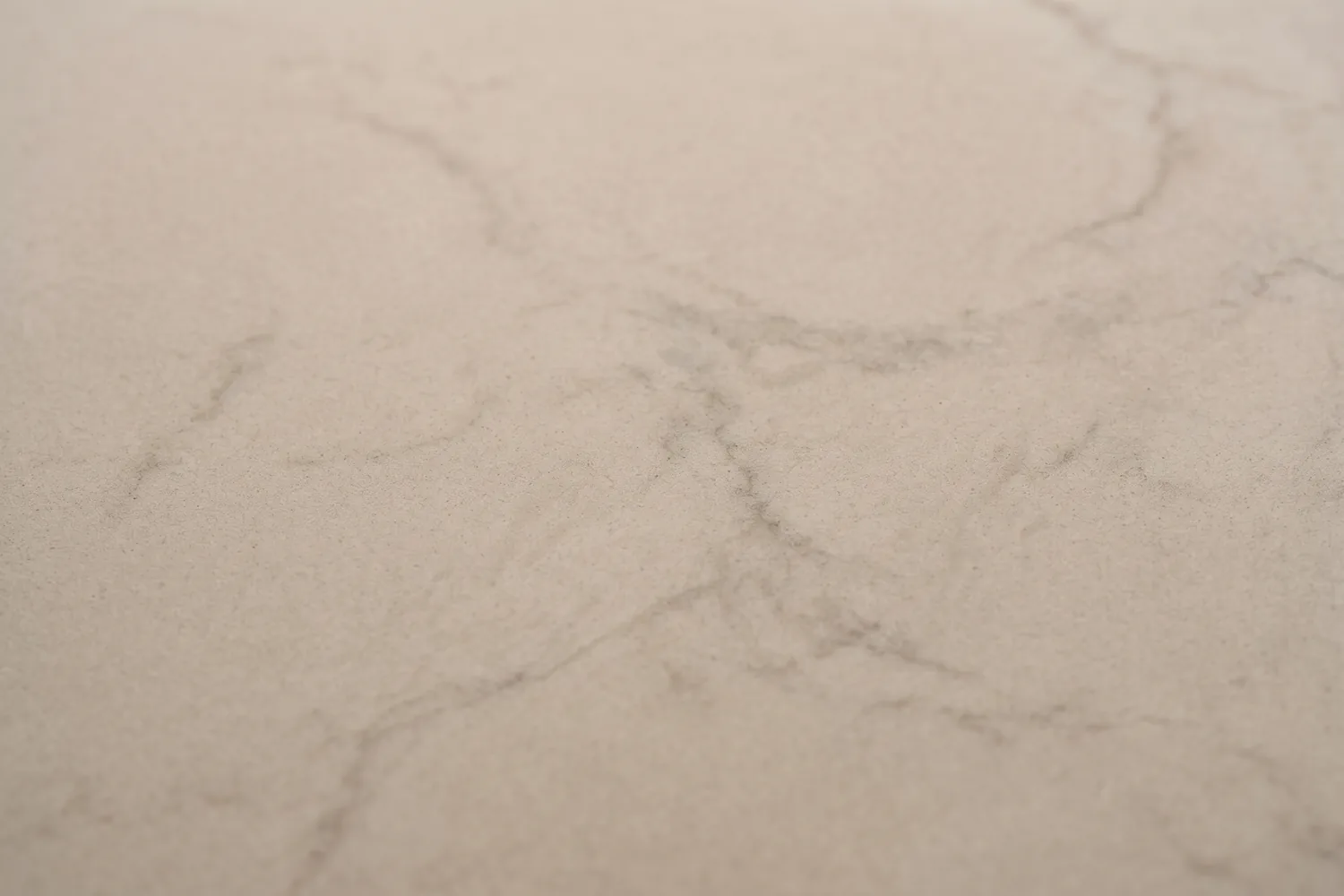
The middle ground. Honed stops the polishing process earlier, so the surface is smooth but has no gloss. It reads as flat and muted — the veining is still visible but less saturated, and the overall look is softer and more contemporary. A honed counter photographs understated, almost like concrete, but with the natural stone character preserved up close.
Pros
- Hides fingerprints and water spots better than polished
- Softer, more casual aesthetic — less shiny, more organic
- No distracting reflections under bright kitchen lighting
- Shows scratches slightly less than polished on natural stone
- Works in transitional and farmhouse kitchens where polished reads too formal
Cons
- More porous than polished — needs more frequent sealing
- Shows oil stains if sealer wears off (olive oil, fingerprints with lotion)
- Veining looks desaturated — loses visual drama
- Typically adds $5 to $10 per square foot over polished
- Some slabs available only in polished from the supplier
Best fit: Transitional, farmhouse, or contemporary casual kitchens. Clients drawn to the muted aesthetic. Bathrooms where a softer, spa-like feel matters more than mirror shine.
Leathered
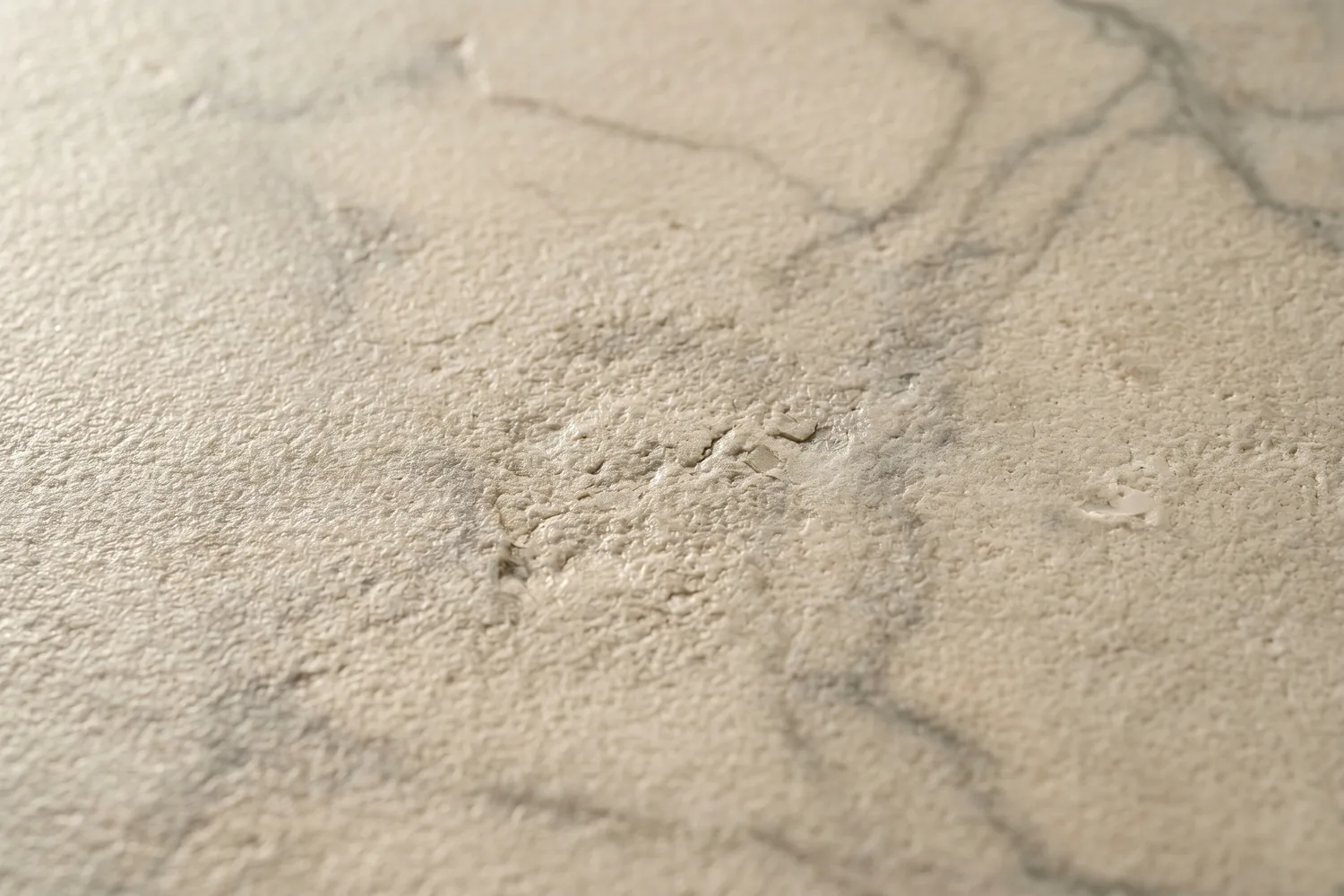
The textured option. A leathered surface starts as a honed slab and gets brushed with coarse abrasive wheels to create a pebbled tactile finish. From a few feet away the counter reads matte. Up close, fingers feel a soft grain — organic, not rough. The texture tones down veining noticeably and makes the stone feel calmer and more tactile.
Pros
- Hides fingerprints, water spots, and micro-scratches best of all three
- Distinct tactile feel — adds character to understated stones
- Softens dramatic veining — useful when a busy slab feels overwhelming
- Shows daily wear the least — high-traffic kitchen friendly
- Unique look — clients who want something different pick this
Cons
- Slightly harder to deep-clean — food and oil settle into texture
- Needs more sealing than polished (not more than honed, but more than polished)
- Typically adds $5 to $15 per square foot over polished
- Often requires a special quarry order — adds 2 to 3 weeks of lead time
- Tones down the veining — wrong pick if the slab was chosen for dramatic veins
Best fit: Organic, farmhouse, transitional, or coastal-casual kitchens. High-traffic kitchens with kids or frequent entertaining. Clients who want a tactile, understated counter that hides daily wear.
Side-by-side comparison
| Factor | Polished | Honed | Leathered |
|---|---|---|---|
| Look | Glossy, dramatic | Matte, muted | Textured, organic |
| Feel | Smooth, cool | Smooth, soft | Pebbled, tactile |
| Vein visibility | Maximum | Medium | Softened |
| Hides fingerprints | No | Yes | Best of three |
| Sealing frequency | Every 12–18 months | Every 8–12 months | Every 8–12 months |
| Day-to-day cleaning | Easiest | Easy | Slightly harder (texture) |
| Cost (per sf installed) | Baseline | +$5 to $10 | +$5 to $15 |
| Lead time | Standard | Standard | +2 to 3 weeks (if special order) |
| Best kitchen style | Modern, luxury, formal | Transitional, contemporary | Farmhouse, organic, coastal-casual |
How to decide which finish fits
A few questions that point to the right answer for most kitchens:
- How dramatic is the slab? If the stone was picked specifically for dramatic veining (Taj Mahal, Mont Blanc, Calacatta, exotic granite), polished maximizes that drama. Leathering softens the veining so much that it defeats the point of picking a statement slab. Honed lands in the middle.
- How much does daily wipe-down bother the household? Polished shows every fingerprint on dark stones and every water spot on light stones. Leathered hides both. If nobody is going to follow the kids around with a microfiber, leathered is forgiving. If the kitchen gets wiped after every use anyway, polished works fine.
- What's the overall aesthetic? Modern and formal kitchens lean polished. Farmhouse and organic lean leathered. Transitional can go any direction but often lands on honed as the neutral choice.
- Natural stone or engineered quartz? Most engineered quartz only comes polished or honed from the factory — leathered quartz is rare and often not an option. Natural stones (granite, quartzite, marble, soapstone) can take all three finishes.
- Timeline pressure? Leathered natural stone sometimes requires a special quarry order. For tight turnarounds, polished or honed from in-stock slabs keeps the schedule on track.
Before committing to any finish, it's worth physically handling samples — the difference between honed and leathered especially is hard to appreciate from a photo. The JR Stone Design showroom has samples of each finish across multiple stone types available to pick up and compare under real kitchen lighting.
Common questions
What is a polished countertop finish?
Polished is the high-gloss mirror finish most countertops come with by default. It's achieved by grinding the stone through progressively finer diamond pads, typically ending at 3000-grit. The result is a reflective, wet-looking surface that reveals the maximum color depth and vein visibility of the stone. Polished is the most common finish, the easiest to clean, and the least expensive because it requires no extra fabrication steps beyond standard polishing.
What is a honed countertop finish?
Honed is a matte finish with no glossy reflections. It's achieved by stopping the polishing process at a lower grit (typically 400 to 800) so the surface reads as soft and muted instead of shiny. Honed countertops feel smooth to the touch but look less saturated than polished. The finish hides fingerprints and water spots better than polished but is more porous, so it needs more frequent sealing.
What is a leathered countertop finish?
Leathered is a subtly textured matte finish created by running brushes over a honed stone surface to add a pebbled tactile quality. The finish reads matte from a few feet away with visible surface texture up close. Leathered hides fingerprints, water spots, and minor scratches better than either polished or honed. The texture does tone down veining and softens the stone's overall appearance, making it ideal for organic, farmhouse, or casual kitchen styles.
Which finish is most durable?
All three are equally durable in terms of impact and scratch resistance since the underlying stone is identical. Leathered hides wear best (fingerprints, water spots, and micro-scratches disappear into the texture), polished shows every mark but wipes clean easily, and honed sits in the middle. For stain resistance, polished is the most closed-pore and requires less sealing. Honed and leathered need more frequent sealing because the matte surface is slightly more porous.
Does finish affect countertop cost?
Yes. Polished is the baseline price with no upcharge. Honed typically adds $5 to $10 per square foot because fabrication stops partway through the polishing process, which still requires careful finishing. Leathered adds $5 to $15 per square foot because the texturing process requires additional brushing steps after honing. Leathered can also require a special order from the quarry, adding 2 to 3 weeks of lead time.
Can any stone be honed or leathered?
Most natural stones can take all three finishes: granite, quartzite, marble, soapstone, and limestone. Engineered quartz is the main exception. Most engineered quartz is only available in polished and honed from the manufacturer; leathered quartz exists but is rare. Natural stones are typically fabricated to the finish in the shop, so any slab can be ordered polished and then honed or leathered before install.
Which finish hides stains best?
Leathered hides stains visually because the pebbled texture breaks up the surface, so a water ring or minor stain is less noticeable at a glance. But structurally, polished resists stain penetration best because its closed-pore surface doesn't absorb liquids as readily. Any stone countertop, regardless of finish, needs to be sealed and wiped promptly after spills to prevent true staining, especially on natural quartzite, granite, and marble.
Which finish is easiest to clean?
Polished is easiest day-to-day — a swipe with a microfiber and pH-neutral cleaner handles most messes. Honed is nearly as easy but shows water marks until dried. Leathered requires slightly more care on deep cleans because food or grease can settle into the textured surface, but routine cleaning is the same. All three need pH-neutral stone cleaner (no vinegar, no bleach, no abrasive scrub) and regular sealing.